Master what operating systems do, how they work, and how to use Windows and Linux like a pro
Description: Learn operating system fundamentals—what an OS is, how the kernel works, and why Windows and Linux matter. Complete beginner’s guide for IT careers.
Audience: Beginners, IT students, career changers, people new to computing, aspiring Linux admins
Reading Time: 13-15 minutes
Difficulty Level: Beginner
Prerequisites: Basic computer knowledge (turning on a computer, using a mouse and keyboard)
Introduction
When you turn on your computer and see the desktop with all those icons and programs, you’re looking at an operating system (OS). But the OS is far more than just what you see on screen.
An operating system is the invisible manager running behind the scenes, orchestrating everything your computer does. It manages your files, runs your programs, controls your memory, and handles communication with every device connected to your computer.
Whether you’re using Windows on a laptop, macOS on a Mac, or Linux on a server, the core concepts are identical. Understanding these fundamentals is essential for anyone pursuing an IT career, a Linux administration role, or cloud engineering.
This guide breaks down operating systems from the ground up—explaining what they are, how they work, and why mastering the command line is essential for your IT future.
Key Takeaway: An operating system is your computer’s manager, and learning to work with it (especially through the command line) is the foundation of any IT career.
What Exactly is an Operating System?
Before we talk about what an OS does, let’s clarify what it actually is.
The Simple Definition
An operating system is the complete package of software that manages your computer’s resources and lets you interact with the computer.
Think of it as a bridge between you and your computer’s hardware:
- You (the user) want to do things
- Operating System translates your requests and manages resources
- Computer Hardware executes the actual work
The Two-Part Architecture—Kernel and User Space
All operating systems, regardless of whether they’re Windows, macOS, or Linux, are divided into two main parts:
| Component | What It Does | User Interaction |
|---|---|---|
| Kernel | The core manager that talks directly to hardware | You never interact with it directly |
| User Space | Everything you see and interact with (programs, menus, buttons) | This is where you spend your time |
The Kernel—The Hidden Manager:
The kernel is the heart of the operating system. It’s the lowest-level software that has direct access to your computer’s hardware. The kernel:
- Controls CPU usage
- Manages memory allocation
- Controls input/output devices
- Decides which programs get to run and when
Most Importantly: You never directly interact with the kernel. You don’t write to it or modify it during daily computer use. The kernel operates invisibly, behind the scenes.
User Space—What You Interact With:
User space is everything visible: your desktop, applications, menus, buttons, file folders, and every program you run. This is where your interaction with the OS happens.
Real-World Analogy: Think of the kernel as the restaurant’s kitchen (where the real work happens, and you don’t go), and user space as the dining room (where you sit and enjoy the service).

The Kernel’s Four Main Jobs
The kernel is the OS’s internal manager, and it has four critical responsibilities. Understanding these helps you grasp what an OS actually does.
Job #1—File Management
What It Does: Organizes and stores all your files and data.
In Practice:
- When you save a document, the kernel decides where to store it on your hard drive
- When you open a file, the kernel retrieves it from the hard drive
- The kernel keeps track of where everything is stored
- The kernel organizes files into folders (directories)
Why This Matters:
Without file management, your files would be scattered randomly on the hard drive with no organization. The kernel ensures:
- Files are stored efficiently
- Files can be found quickly
- Files don’t overwrite each other
- Folder structures are maintained
From Your Perspective: You see folders and files organized logically. Behind the scenes, the kernel is managing their actual locations on the physical hard drive.
Job #2—Process Management
What It Does: Runs and manages all programs (processes), ensuring each gets CPU time.
What’s a Process?
Every running program is a process. If you have a web browser, text editor, and music player open simultaneously, that’s three processes running.
The Challenge:
Modern CPUs have only a few cores (usually 4-16), but you might have dozens of programs running. The kernel must decide:
- Which program gets to use the CPU right now?
- How long does each program get?
- When should it switch to another program?
How the Kernel Solves It—Context Switching:
The kernel uses context switching to rapidly switch between processes:
Process A uses CPU for 1 millisecond
↓ Kernel switches
Process B uses CPU for 1 millisecond
↓ Kernel switches
Process C uses CPU for 1 millisecond
↓ Kernel switches back to Process A
This happens thousands of times per second, making it seem like all programs run simultaneously.
From Your Perspective: All your programs appear to run at the same time, smoothly and without interference.
Job #3—Memory Management
What It Does: Manages RAM and uses virtual memory to ensure programs have enough memory.
The Memory Challenge:
Programs need RAM to run. If you open too many programs, you might run out of physical RAM. The kernel solves this cleverly.
Two Types of Memory:
| Memory Type | Characteristics | Speed | Cost |
|---|---|---|---|
| Physical RAM | Installed in your computer | Very fast | Expensive |
| Virtual Memory | Hard drive space used as RAM | Much slower | Cheap and unlimited |
How Virtual Memory Works:
RAM is Full:
- Active programs: 8 GB (your RAM limit)
- New program needs 2 GB more

Kernel's Solution (Paging):
1. Takes 2 GB of inactive data from RAM
2. Writes it to hard drive (virtual memory)
3. Frees up 2 GB in RAM
4. Loads the new program into RAM
5. When you switch to the inactive program later, kernel reverses the process
Why This Matters:
Without virtual memory, you’d only be able to run programs that fit in your physical RAM. Virtual memory lets you run more programs than your RAM can hold.
From Your Perspective: Your computer keeps running smoothly even when you open more programs than your RAM can hold. The slowdown you might notice is the kernel managing this swap to/from the hard drive.
Job #4—Input/Output (I/O) Management
What It Does: Handles communication with all devices (keyboard, mouse, monitor, printer, network card, etc.).
The Coordination Challenge:
Your computer has dozens of connected devices, and they all need to communicate with the CPU. The kernel must:
- Accept input from your keyboard and mouse
- Send output to your monitor
- Communicate with your network card
- Manage your printer
- Control USB devices
Device Drivers:
The kernel uses device drivers to communicate with hardware. A driver is software that translates between:
- Generic kernel requests (e.g., “show this image on the monitor”)
- Device-specific commands (e.g., specific graphics card instructions)
From Your Perspective: When you move your mouse, click, or type, the kernel translates these actions into commands for your programs. When programs need to display something, the kernel sends that to your monitor.
Why Understanding These Four Jobs Matters
For IT professionals, understanding these four kernel functions is essential:
- File management: Troubleshooting storage issues and permissions
- Process management: Monitoring CPU usage and killing hung processes
- Memory management: Diagnosing out-of-memory errors and optimizing performance
- I/O management: Troubleshooting device issues and driver problems
Major Operating Systems in IT
Multiple operating systems dominate the IT landscape, each with specific use cases and strengths.
Windows
Developed By: Microsoft
Common In: Business environments, consumer computers
What “PC” Means: The term “PC” often refers specifically to Windows computers (though technically it means personal computer).
Characteristics:
- Graphical user interface focused
- Proprietary (not open-source)
- Dominant in business environments
- Wide software support
- Generally easier for beginners
IT Use: Windows is common for user workstations, though servers increasingly use Linux.
macOS
Developed By: Apple
Common In: Consumer space, creative professionals, Apple users
Characteristics:
- Graphical user interface focused
- Proprietary (Apple products only)
- Unix-based (similar architecture to Linux)
- Premium pricing
- Popular among designers and developers
IT Use: Less common in enterprise IT, but growing in development environments.
Linux
Developed By: Open-source community
Common In: Servers, cloud infrastructure, embedded systems
Key Characteristic: Open-source (free to use, modify, and distribute)
Why Linux Dominates IT:
- Powers the vast majority of web servers worldwide
- Critical for cloud infrastructure (AWS, Google Cloud, Azure all run Linux)
- Extremely stable and reliable
- Highly configurable for specific needs
- Free—no licensing costs for servers
Distributions (Distros): Linux comes in different flavors called distributions. Each distro includes the Linux kernel plus additional software:
| Distro | Use Case | Beginner-Friendly |
|---|---|---|
| Ubuntu | General-purpose, beginner-friendly | YES ✓ |
| Red Hat | Enterprise servers | Moderate |
| Debian | Stability-focused | Moderate |
| CentOS | Server environments | Moderate |
| Fedora | Cutting-edge features | No |
For Learning: Ubuntu is the most beginner-friendly Linux distribution.
The Hidden Truth—You’ve Probably Used Linux
Key Insight: Android and ChromeOS both run on the Linux kernel. If you’ve used an Android phone or a Chromebook, you’ve already used Linux without realizing it!
| Operating System | Linux Kernel? | Common Use |
|---|---|---|
| Ubuntu Desktop | YES ✓ | Personal computers |
| Android | YES ✓ | Mobile phones |
| ChromeOS | YES ✓ | Chromebooks |
| Server Linux | YES ✓ | Web servers |
| Windows | NO ✗ | Personal/Business computers |
| macOS | NO ✗ | Apple products |
This Matters for Your Career: Understanding Linux kernel concepts means you understand the foundation of billions of devices worldwide.
How Users Interact With the Operating System
There are two fundamental ways users interact with an OS: through graphics or through text commands.
GUI—The Graphical User Interface
What It Is: A visual interface with windows, icons, buttons, and menus that you interact with using a mouse.
Characteristics:
- Easy to learn and use
- Visual and intuitive
- Good for beginners
- Self-documenting (buttons labeled clearly)
- Slower for advanced tasks
- Requires a display monitor
Common Tasks with GUI:
- Double-clicking to open programs
- Dragging files between folders
- Right-clicking for context menus
- Clicking buttons and menu items
When You Use GUI: Everyday computer use—using a web browser, opening documents, managing files.
CLI—The Command Line Interface (Shell)
What It Is: A text-based interface where you type commands to tell the operating system what to do.
Characteristics:
- Steep learning curve initially
- Powerful and precise
- Essential for IT professionals
- Fast for advanced tasks
- Works without a graphical display
- Can automate tasks with scripts
Example CLI Command:
mkdir my-super-cool-folderThis command creates a new folder called “my-super-cool-folder”.
When You Use CLI: System administration, server management, automation, remote access.
Why the Command Line is Critical for IT Professionals
If you’re pursuing an IT career (especially Linux administration or cloud engineering), the CLI is non-negotiable. Here’s why:
Reason #1: Remote Management
Many servers run without a graphical interface. You manage them remotely using only the command line. There’s no GUI available—only text-based commands.
Reason #2: Automation at Scale
Imagine managing 1,000 servers. Using a GUI would be impossible and wildly inefficient. Instead, you write scripts:
for i in {1..1000}; do
  ssh server$i "install-security-updates"
done
This script updates 1,000 servers simultaneously. Impossible with a GUI.
Reason #3: Speed and Power
CLI is significantly faster for advanced tasks. What takes 5 minutes in a GUI takes 5 seconds in CLI.
Reason #4: Industry Standard
Professional IT environments expect CLI proficiency. It’s as basic as email in the business world.
Reason #5: Cloud and DevOps
Modern cloud platforms (AWS, Google Cloud, Azure) rely heavily on CLI and scripting. Cloud engineers live in the command line.
Important Message: Start practicing basic CLI commands now. Build comfort and confidence. This skill will directly impact your career trajectory.
The Boot Process—What Happens When You Turn On Your Computer
Understanding the boot process is essential for IT professionals, especially when troubleshooting startup issues.
Step-by-Step Boot Process
Step 1: Power On
You press the power button. The computer receives power, and hardware initialization begins.
Step 2: BIOS/UEFI Initializes Hardware
The first software to run is BIOS (Basic Input/Output System) or UEFI (Unified Extensible Firmware Interface)—low-level software stored on a special chip on the motherboard.
BIOS/UEFI:
- Initializes all hardware components
- Checks that hardware is functioning
- Looks for a boot device (hard drive, USB, etc.)
Step 3: POST (Power-On Self-Test)
BIOS/UEFI runs diagnostic tests:
- Tests CPU functionality
- Checks RAM for errors
- Verifies all critical hardware is working
- If something fails, the motherboard beeps error codes
Step 4: Bootloader is Located and Loaded
BIOS/UEFI finds the bootloader—a small program that starts the OS—on a device:
- Usually the hard drive
- Could be a USB drive
- Could be a network drive
Step 5: Bootloader Loads the Kernel
The bootloader’s job is to:
- Find the kernel on the hard drive
- Load it into RAM
- Start kernel execution
Step 6: Kernel Loads Drivers and System Processes
Now the kernel takes over:
- Loads device drivers
- Starts essential system services
- Sets up memory management
- Prepares for user applications
Step 7: User Space Loads
Finally, the operating system displays:
- Login screen (if security is enabled)
- Desktop (if no login required)
- Application launcher
- System tray and taskbar
From Power Press to Desktop: 30-60 seconds (depending on your computer’s speed and the OS)
Boot Process Troubleshooting
For IT professionals, understanding this process helps troubleshoot:
| Problem | Likely Step | What to Check |
|---|---|---|
| Computer won’t turn on | Step 1-2 | Power supply, hardware connections |
| Beep codes or POST errors | Step 3 | Hardware failures (RAM, CPU) |
| No bootloader found | Step 4 | Hard drive failure, BIOS settings |
| Kernel panic | Step 5-6 | Corrupted OS, driver issues |
| Stuck on login screen | Step 7 | Login service failure |
Choosing an Operating System for Installation
When setting up a new computer for a specific purpose, you’ll need to choose an appropriate operating system. Here’s how to make that decision.
The Decision Framework
Ask yourself these questions in this order:
Question 1: Has the Company Already Decided?
In most cases, yes. Company IT departments standardize on specific operating systems. Your choice might already be made.
Question 2: What Software Needs to Run?
This is often the deciding factor. Consider:
- Does the software run on Windows, macOS, or Linux?
- Some software is exclusive to one OS
- Example: If you need Adobe Creative Suite, macOS or Windows (not Linux)
- Example: If you need Apache web server, Linux is ideal
Question 3: What Hardware Will It Run On?
Compatibility is crucial:
- Is the hardware compatible with the OS?
- Is it a 32-bit or 64-bit processor?
- How much RAM does it have?
The 32-Bit vs. 64-Bit Rule
Simple Rule: Use a 64-bit OS with a 64-bit CPU.
What This Means:
| Architecture | Address Space | Max RAM | Modern? |
|---|---|---|---|
| 32-bit | 4 GB | 4 GB maximum | Legacy only |
| 64-bit | Essentially unlimited | 16 TB+ practically | Current standard |
Why 64-bit?
- Modern CPUs are 64-bit
- Modern software expects 64-bit
- Significantly better performance
- Dramatically more memory support
- 32-bit is obsolete in professional environments
Action Item: Always verify your CPU is 64-bit before installing any OS. Installing 32-bit on a 64-bit CPU is wasting resources.
Decision Checklist
Before Installing an OS:
- What company standard has been set?
- What software must run on this computer?
- Is the CPU 32-bit or 64-bit?
- How much RAM does the computer have?
- Will the OS support the required hardware?
- Does the hardware have compatible drivers for this OS?
- Are there licensing costs to consider?
Virtual Machines—Running Multiple Operating Systems
Virtual machines are one of the most powerful tools in IT, and understanding them is essential.
What is a Virtual Machine?
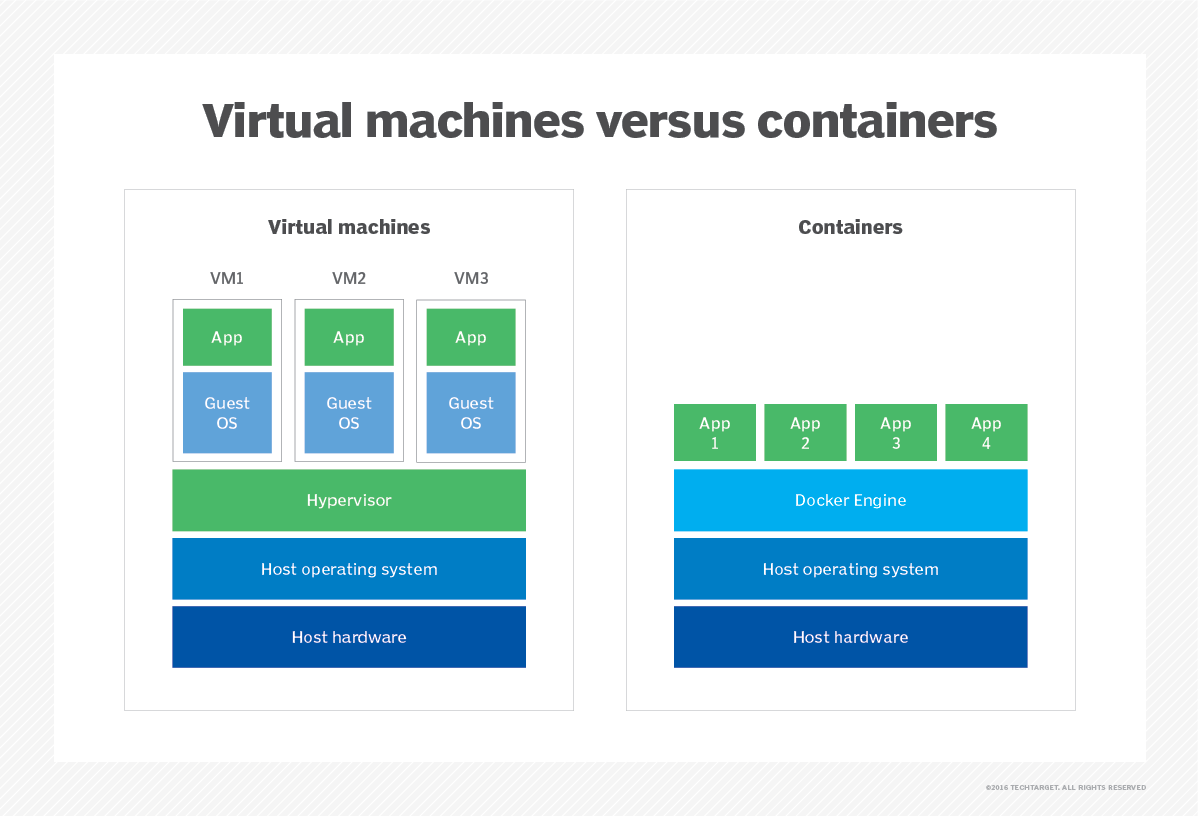
A virtual machine (VM) is a software simulation of a physical computer. It’s an OS running inside another OS.
Real Example:
Your Physical Computer (Host):
├─ Windows 10 (Host OS)
├─ Virtual Machine #1 → Running Linux Ubuntu
├─ Virtual Machine #2 → Running Windows Server
└─ Virtual Machine #3 → Running another Linux distribution
Each VM behaves like a real computer but runs as software on the host.
Why Virtual Machines Matter
Reason #1: Run Multiple OSes Simultaneously
- Test different operating systems without buying new hardware
- Run Windows and Linux at the same time on one computer
- Essential for developers and IT professionals
Reason #2: Cost Savings
- One powerful server can host dozens of VMs
- No need to buy separate physical servers
- Data centers use VMs extensively
Reason #3: Testing and Learning
- Test new software safely in an isolated environment
- If something breaks, delete the VM and start fresh
- Perfect for hands-on learning (like Qwiklabs)
- No risk of breaking your actual computer
Reason #4: Security and Isolation
- Compromised VMs don’t affect the host system
- Each VM is isolated from others
- Test malware or suspicious software safely
Virtual Machine Software
Popular VM software includes:
| Software | Host OS | Price | Common Use |
|---|---|---|---|
| VirtualBox | Windows, Mac, Linux | Free | Learning, development |
| VMware Workstation Pro | Windows, Linux | Paid | Professional development |
| Hyper-V | Windows | Included | Enterprise servers |
| KVM | Linux | Free | Server virtualization |
| Qwiklabs | Browser-based | Included in courses | IT training labs |
For Learning: VirtualBox is free, powerful, and perfect for beginners.
VMs in Your IT Career
How You’ll Use VMs:
- Create Linux VMs to practice CLI commands
- Test new software without affecting your main system
- Run multiple servers simultaneously on one computer
- Practice system administration tasks safely
- Complete hands-on labs in Qwiklabs and similar platforms
Real-World Example: When taking IT courses with hands-on labs, you’re typically working with VMs. Qwiklabs provides pre-configured VMs that you can create, modify, and delete on-demand. This lets you practice real system administration without expensive hardware.
Practice Guide – Click here
Key Differences—GUI vs. CLI
| Task | GUI (Windows) | CLI (Linux) |
|---|---|---|
| Visual Feedback | See folder immediately | Silent creation |
| Speed | 5-6 clicks/actions | 1 command |
| Learning Curve | Intuitive | Requires memorization |
| Scalability | Limited (1 folder at a time) | Unlimited (create 1,000 folders in seconds) |
| Automation | Nearly impossible | Simple with scripts |
Important Takeaway: Both approaches do the same thing—create a folder. But the CLI is dramatically more powerful for professional use.
Career Path Alert—Why CLI Mastery is Critical
If you’re reading this because you want to become a Linux Admin or Cloud Engineer, pay close attention.
The CLI is Non-Negotiable
The command line is not optional. It’s as fundamental to Linux administration as a stethoscope is to a doctor.
Why?
Reason #1: Remote Servers Have No GUI
When you SSH (secure shell) into a remote server, you don’t get a desktop. You get a command line. That’s it. Everything you do requires CLI skills.
Reason #2: Speed and Efficiency
Experienced admins manage hundreds of servers using scripts and CLI commands. They’re orders of magnitude faster than GUI interactions.
Reason #3: Industry Expectations
Job postings for Linux admins and cloud engineers assume CLI proficiency. It’s a baseline expectation, like email proficiency in office jobs.
Reason #4: Automation
The power of IT comes from automation. Automation happens through scripts, which run in the CLI.
Start Building Your CLI Skills Now
Immediate Actions:
- Set Up a Linux VM (Ubuntu recommended)
- Download VirtualBox (free)
- Download Ubuntu ISO file (free)
- Create a VM and install Ubuntu
- Budget 30-60 minutes
- Practice Basic Commands
mkdir— create foldersls— list contentscd— change directorytouch— create filesrm— delete filespwd— print working directory
- Complete Small Tasks
- Navigate directories
- Create folder structures
- Create and delete files
- Use wildcard patterns
- Progress to Scripts
- Learn bash scripting syntax
- Create simple automation scripts
- Schedule scripts to run automatically
- Learn System Administration
- User and permission management
- Package installation
- Service management
- Log file reading
Timeline Suggestion:
- Week 1-2: Master basic commands
- Week 3-4: Comfortable with navigation and file operations
- Week 5-8: Start simple scripting
- Month 3+: Advanced administration tasks
The Investment: Time spent now on CLI skills will multiply your value in the job market. Employers will pay significantly more for someone who can confidently manage systems through the command line.
Key Takeaways
- OS is a Manager: An operating system manages your computer’s resources and provides an interface for you to interact with the computer.
- Kernel vs. User Space: The kernel (hidden) manages hardware and runs invisible to you. User space (visible) is everything you interact with.
- Four Kernel Jobs: File management, process management, memory management, and I/O management—understand these and you understand what an OS does.
- Multiple OSes Exist: Windows, macOS, and Linux each have specific strengths. Linux dominates servers and cloud infrastructure.
- You’ve Used Linux: Android and ChromeOS run Linux kernels. Linux is everywhere, even if you don’t realize it.
- GUI vs. CLI: GUI is easy but limited. CLI is powerful but requires learning. Both are necessary skills.
- CLI is Essential for IT: For Linux administration and cloud engineering, CLI mastery is non-negotiable. Start practicing now.
- Boot Process Matters: Understanding what happens from power-on to desktop helps troubleshoot startup problems.
- Choose OS by Purpose: Let software requirements, hardware capabilities, and company standards guide your OS choice.
- Virtual Machines are Powerful: VMs let you run multiple OSes on one computer—essential for learning and testing.
- 64-bit is the Standard: Always use 64-bit OS on 64-bit hardware. 32-bit is obsolete.
- Hands-On Practice is Essential: Reading about CLI is useless—you must practice until commands become second nature.
Practical Action Plan
Week 1—Foundation Building
Tasks:
- Set up a Linux VM (Ubuntu) using VirtualBox
- Complete Lab 2 (create folders with mkdir)
- Practice 5 basic commands daily
- Create folder structures using CLI
Time Commitment: 1-2 hours per day
Week 2—File Operations
Tasks:
- Master navigation (cd, pwd, ls)
- Learn file creation and deletion (touch, rm)
- Practice with various file types
- Create meaningful directory structures
Time Commitment: 1-2 hours per day
Weeks 3-4—Building Confidence
Tasks:
- Complete simple file management tasks
- Combine multiple commands
- Learn pipes and output redirection (|, >)
- Read documentation (man pages)
Time Commitment: 1-2 hours per day
Success Indicator: You can confidently navigate Linux, create/delete files and folders, and understand basic command syntax.
Conclusion
Operating systems are the foundation of computing. Whether you’re using Windows, macOS, or Linux, the same core principles apply: managing files, processes, memory, and input/output.
For those pursuing IT careers—especially Linux administration or cloud engineering—understanding operating system fundamentals is just the beginning. The real power comes from mastering the command line and learning to automate your work through scripts and system management.
The GUI is fine for beginners and everyday use, but the CLI is where professionals work. Start practicing now. Build comfort and confidence with commands. This investment in foundational skills will directly translate to better job opportunities and higher compensation.
Your operating system is not magical. It’s not mysterious. It’s a well-designed tool for managing computer resources. Once you understand how it works, you’re ready to manage the systems that run the world.
Additional Resources and Next Steps
To Deepen Your Operating System Knowledge:
- Explore Linux file permissions (chmod, chown)
- Learn about processes (ps, top, kill)
- Study shell scripting (bash)
- Understand users and groups
- Learn about package management (apt, yum)
Hands-On Practice Platforms:
- VirtualBox (free VM software)
- Qwiklabs (hands-on IT labs with VMs)
- Linux Academy (practice environment)
- TryHackMe (interactive Linux learning)
Recommended Reading:
- “The Linux Command Line” by William Shotts (free online)
- Ubuntu documentation (ubuntu.com/support)
- Man pages on your Linux system (man mkdir, etc.)
Certifications Building on This Foundation:
- CompTIA A+ (includes OS fundamentals)
- CompTIA Linux+
- LPI Linux Essentials
- Red Hat Certified System Administrator (RHCSA)
Courses to Consider:
- Google IT Support Professional Certificate (Coursera)
- Linux Command Line Basics
- Linux System Administration courses
